


5 Signs It May Be Time to Consider Hospice Care
For many families, the word hospice is one of the hardest words they'll ever hear. Over the years, I've sat beside countless families who have told me the same thing: "I wish someone had talked to us about hospice sooner." One of the biggest misconceptions about hospice is that it's only for someone's final days. The truth is, hospice is about making the most of the time that remains. It's about comfort, dignity, support, and helping patients and families focus on living rather than constantly managing medical crises.
As a nurse, I've learned that the decision to explore hospice isn't about giving up. It's about asking a different question. Instead of asking, "What more can we do to cure this illness?" we begin asking, "How can we make each day as comfortable and meaningful as possible?" If you're caring for a loved one, here are five signs that it may be time to have a conversation about hospice care.
1. Frequent Hospitalizations or Emergency Room Visits
If your loved one has been admitted to the hospital multiple times over the past several months for the same condition, it may be a sign that their illness is progressing. Repeated trips to the emergency room can be physically exhausting and emotionally draining for everyone involved. Hospice care helps reduce unnecessary hospitalizations by bringing expert medical care, symptom management, medications, equipment, and emotional support directly to wherever the patient calls home. Sometimes the greatest gift isn't another hospital stay—it's the opportunity to remain comfortably surrounded by family.
2. Daily Activities Have Become Increasingly Difficult
Many serious illnesses gradually take away a person's ability to do everyday tasks. Simple activities like getting out of bed, bathing, preparing meals, walking safely, or even holding conversations may become increasingly difficult. These changes often happen slowly, making it hard for families to recognize how much has changed over time. Hospice provides a team of professionals—including nurses, aides, social workers, chaplains, and volunteers—who work together to help patients maintain as much comfort, independence, and dignity as possible.
No family should have to carry that burden alone.
3. Symptoms Are Becoming Harder to Control
Pain, shortness of breath, anxiety, nausea, fatigue, and restlessness can significantly affect a person's quality of life. One of the greatest benefits of hospice is expert symptom management. Our goal is never simply to add days to life—but to add comfort, peace, and quality to each day. Families are often surprised by how much relief their loved one experiences once hospice services begin.
4. Curative Treatments Are No Longer Helping
There may come a point when treatments intended to cure an illness are no longer effective or begin causing more discomfort than benefit. This is an incredibly personal decision, and every family walks this journey differently. Choosing hospice doesn't mean hope disappears. Hope simply changes. Instead of hoping for another treatment, families often begin hoping for meaningful conversations, peaceful moments, less pain, more laughter, and precious time together. Those moments are incredibly valuable.
5. Caregiving Has Become Overwhelming
Being a caregiver is one of the greatest acts of love a person can give. But even the strongest caregivers become tired. I've met husbands, wives, sons, daughters, and friends who carried the weight of caregiving quietly because they believed they had to do everything themselves.
The truth is, accepting help isn't a sign of weakness. It's a sign of love.
Hospice doesn't replace family. We come alongside families to provide education, emotional support, nursing care, medical equipment, medications related to the terminal illness, and guidance so they never feel like they're walking this journey alone.
Hospice Is About Living Well
One of the most common things I hear is: "I wish we had called sooner." Families often tell us they expected hospice to be about dying. Instead, they discovered hospice was about living more comfortably, creating meaningful memories, and allowing their loved one to spend time where they felt safest—at home. Hospice gives families permission to stop chasing appointments and start focusing on what matters most: being together.
A Final Thought
If you've found yourself wondering whether hospice might be appropriate for someone you love, I encourage you to ask the question. Having a conversation doesn't mean you're making a commitment. It simply means you're gathering information so you can make the best decision for your family.
At BeyondFaith Hospice, we're honored every time someone trusts us enough to ask questions. Whether hospice is the right choice today or sometime in the future, we're here to provide guidance, compassion, and support every step of the way.
No family should have to navigate this journey alone.
Becky Richardson, RN, BSN
Owner & CEO
BeyondFaith Hospice
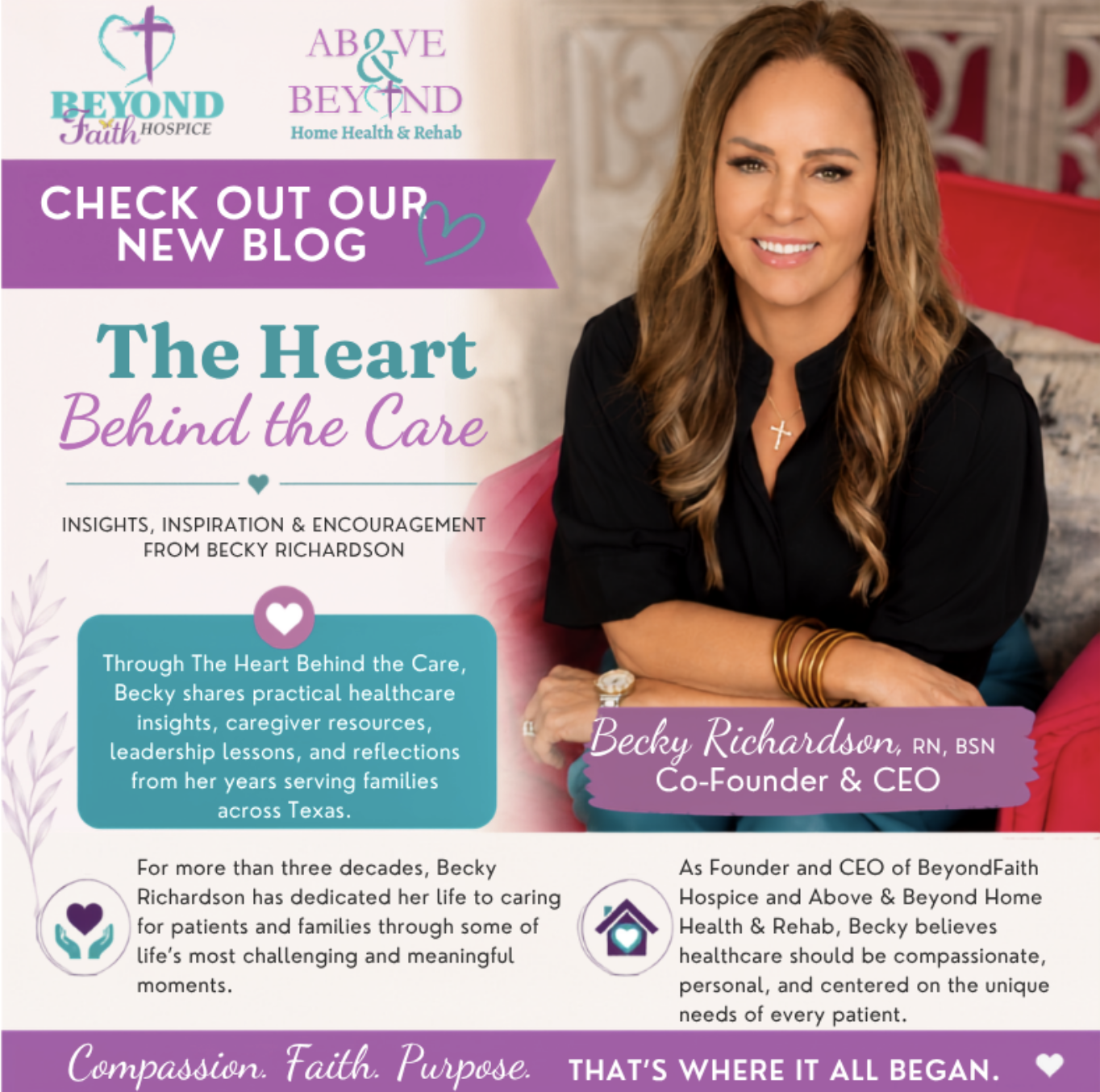
For more than three decades, Becky Richardson RN, BSN has dedicated her life to caring employees, patients and families through some of life's most challenging and meaningful moments. As Co-Founder and CEO of BeyondFaith Hospice and Above & Beyond Home Health & Rehab, Becky believes healthcare should be compassionate, personal, and centered on the unique needs of every patient. Each month, through The Heart Behind the Care, Becky will share practical healthcare insights, caregiver resources, leadership lessons, and reflections from her years serving families across Texas.


.svg)
.svg)
