


More Than Care. It's a Calling.
November is National Hospice & Palliative Care Month—a time to recognize the extraordinary work of hospice and palliative care professionals and, perhaps more importantly, to help families better understand the comfort, compassion, and support these services provide.
Honoring National Hospice & Palliative Care Month
November is National Hospice & Palliative Care Month—a time to recognize the extraordinary work of hospice and palliative care professionals and, perhaps more importantly, to help families better understand the comfort, compassion, and support these services provide.
After more than three decades in healthcare, I've learned that some of the most meaningful moments in our lives happen when we least expect them.
Sometimes they're found in a quiet conversation at a bedside. Sometimes they're in the relief on a family's face when a loved one's pain is finally under control. And sometimes they're in the simple act of holding someone's hand when words are no longer necessary.
These moments remind me why I chose a career in healthcare and why hospice holds such a special place in my heart.
Because hospice isn't simply about caring for someone at the end of life. It's about helping them live with dignity, comfort, and purpose during the time they have.
Understanding Hospice and Palliative Care
One of the things I hope families take away from National Hospice & Palliative Care Month is that both hospice and palliative care are centered on improving quality of life.
While they share many similarities, there are important differences.
Palliative care focuses on relieving pain, managing symptoms, and improving comfort for individuals living with serious illnesses. It can be provided at any stage of illness and may be offered alongside treatments intended to cure or control a disease.
Hospice care provides specialized comfort-focused care for individuals with a life-limiting illness when the focus of treatment has shifted away from curing the disease and toward quality of life.
Under Medicare guidelines, hospice generally becomes an option when physicians certify that a patient has a life expectancy of six months or less if the illness follows its expected course. Patients can continue receiving hospice beyond six months when they remain eligible.
Both approaches recognize something I believe deeply:
Caring for someone means caring for the whole person—not just treating their illness.
Hospice Is About More Than Medical Care
When families first hear the word hospice, they often think about nurses, medications, and medical equipment.
And while those are important parts of what we do, hospice reaches far beyond medical care.
Hospice is about making sure a patient is comfortable. It's about listening to their concerns, respecting their wishes, and helping them maintain as much independence and dignity as possible.
It's about supporting the spouse who has become a full-time caregiver, answering questions for adult children who may feel overwhelmed, and providing emotional and spiritual support when families need it most.
Hospice care brings together a team of professionals who work collaboratively to meet the unique needs of each patient and family.
That team may include nurses, physicians, hospice aides, social workers, chaplains, volunteers, and other specialized professionals.
Each person brings something different to the table, but we all share the same purpose:
To make every day as meaningful and comfortable as possible.
The Families We Serve Are Part of Our Mission
One thing I've always believed is that when someone enters hospice care, we aren't simply caring for one patient.
We're walking alongside an entire family.
Serious illness can change family dynamics overnight. Spouses become caregivers. Children find themselves making decisions they never imagined having to make. Families struggle to balance their own lives while trying to ensure someone they love receives the best possible care.
And sometimes, they simply need someone to tell them what to expect.
At BeyondFaith Hospice, I want families to know they don't have to navigate those moments alone.
Whether it's helping a caregiver understand medications, providing reassurance during a difficult night, connecting a family with resources, or simply listening when someone needs to talk, those moments matter.
Hospice also provides bereavement support for families following the loss of a loved one because our commitment to compassionate care doesn't end when a patient passes away.
The people we serve become part of our story, just as we become a small part of theirs.
Why I Believe Families Should Learn About Hospice Earlier
If there is one thing I wish more families understood, it's that hospice doesn't have to be a last-minute decision.
Too often, families wait until a loved one is in their final days before reaching out.
Sometimes that happens because they don't understand hospice eligibility. Other times, it's because they believe choosing hospice means giving up hope.
But hope doesn't disappear when someone chooses comfort-focused care.
Hope may simply begin to look different.
It may mean hoping for a peaceful night's sleep, a day without severe pain, another family dinner, or the opportunity to share memories with someone you love.
When families begin conversations about hospice earlier, they may have more time to benefit from the services, education, and emotional support available.
I often encourage families to ask questions before they find themselves in a crisis.
You don't have to be ready to choose hospice to begin learning about it.
Recognizing the Hearts Behind Hospice Care
National Hospice & Palliative Care Month is also an opportunity to recognize the incredible people who have dedicated their lives to this work.
Our nurses, hospice aides, social workers, chaplains, volunteers, administrative teams, and countless others do work that isn't always easy.
They walk into homes during some of the most vulnerable moments in a family's life.
They provide comfort when someone is hurting, reassurance when someone is afraid, and compassion when there are no easy answers.
They celebrate the good days, support families through the difficult ones, and often form meaningful relationships with the people they serve.
I've always believed that providing excellent hospice care requires more than clinical knowledge and professional skill.
It requires heart.
It requires patience, understanding, and a willingness to meet people exactly where they are.
To every hospice and palliative care professional who gives so much of themselves to care for others, thank you.
The work you do matters, and the difference you make extends far beyond what you may ever see.
More Than Care. It's a Calling.
When I reflect on what National Hospice & Palliative Care Month means to me, I don't think first about statistics, services, or healthcare programs.
I think about people.
I think about the families who have trusted us during some of the most difficult days of their lives.
I think about the patients who have taught us lessons in courage, gratitude, love, and resilience.
And I think about the dedicated professionals who show up every day because they believe, as I do, that every person deserves compassionate care and dignity.
At BeyondFaith Hospice, we are proud to be nurse-owned and spiritually led. Those aren't simply words that describe our organization. They reflect the values we strive to bring into every interaction with the patients and families we serve.
During National Hospice & Palliative Care Month, I encourage you to learn more about the care available in your community.
Have conversations with your family about what matters most to you. Ask questions about hospice and palliative care. And if someone you love is facing a serious illness, don't wait until you're overwhelmed to explore the support that may be available.
Because the true measure of compassionate care isn't simply what we do for someone.
It's how we make them feel, how we honor their wishes, and how we help them make the most of every moment. And to me, that will always be more than care.
It's a calling.
With gratitude,
Becky Richardson, RN, BSN
Owner & CEO
BeyondFaith Hospice
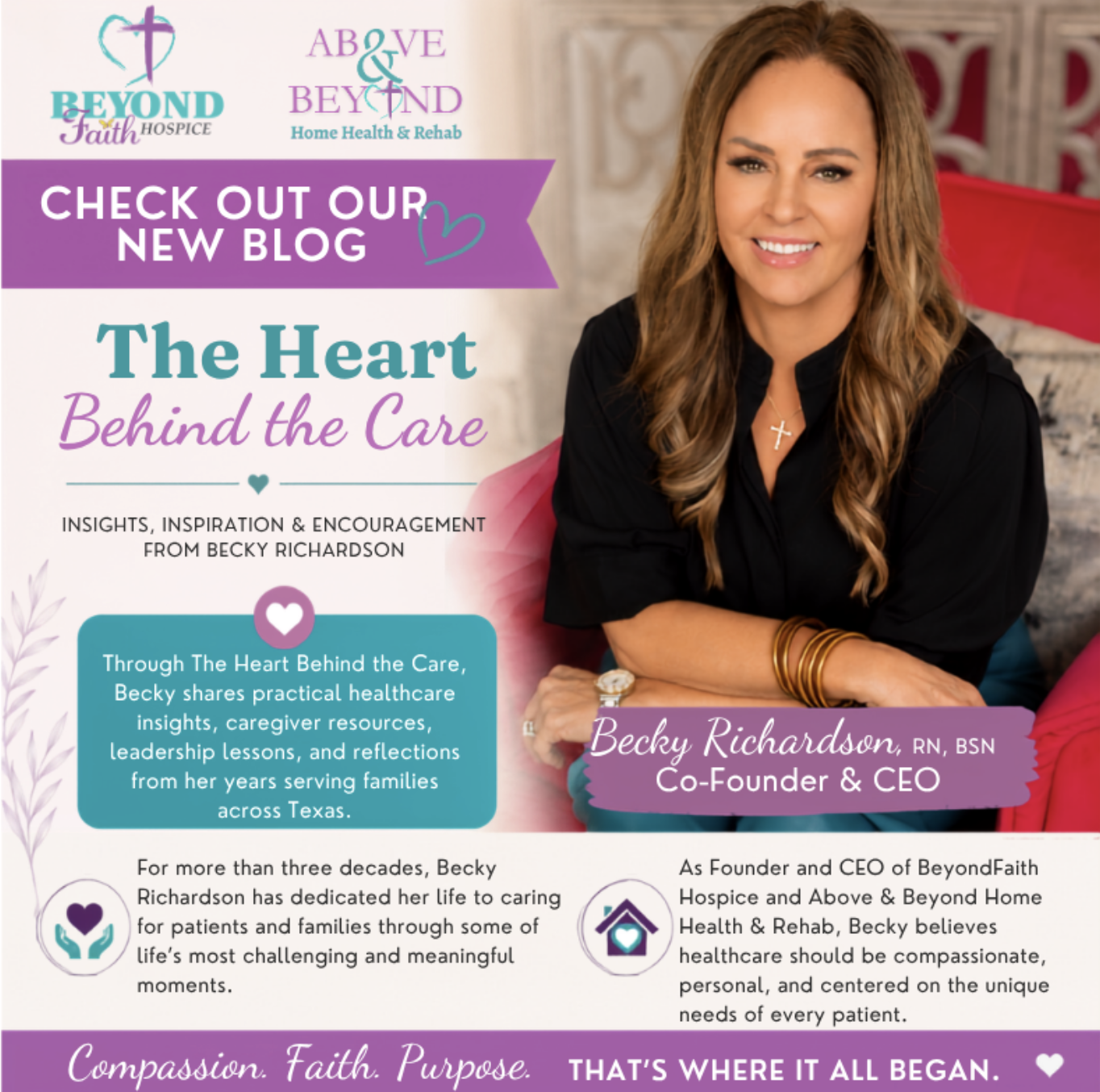
For more than three decades, Becky Richardson RN, BSN has dedicated her life to caring employees, patients and families through some of life's most challenging and meaningful moments. As Co-Founder and CEO of BeyondFaith Hospice and Above & Beyond Home Health & Rehab, Becky believes healthcare should be compassionate, personal, and centered on the unique needs of every patient. Each month, through The Heart Behind the Care, Becky will share practical healthcare insights, caregiver resources, leadership lessons, and reflections from her years serving families across Texas.


